Developer tooling · Open-source product · 2026
envdript
When code needs a variable, the template should know.
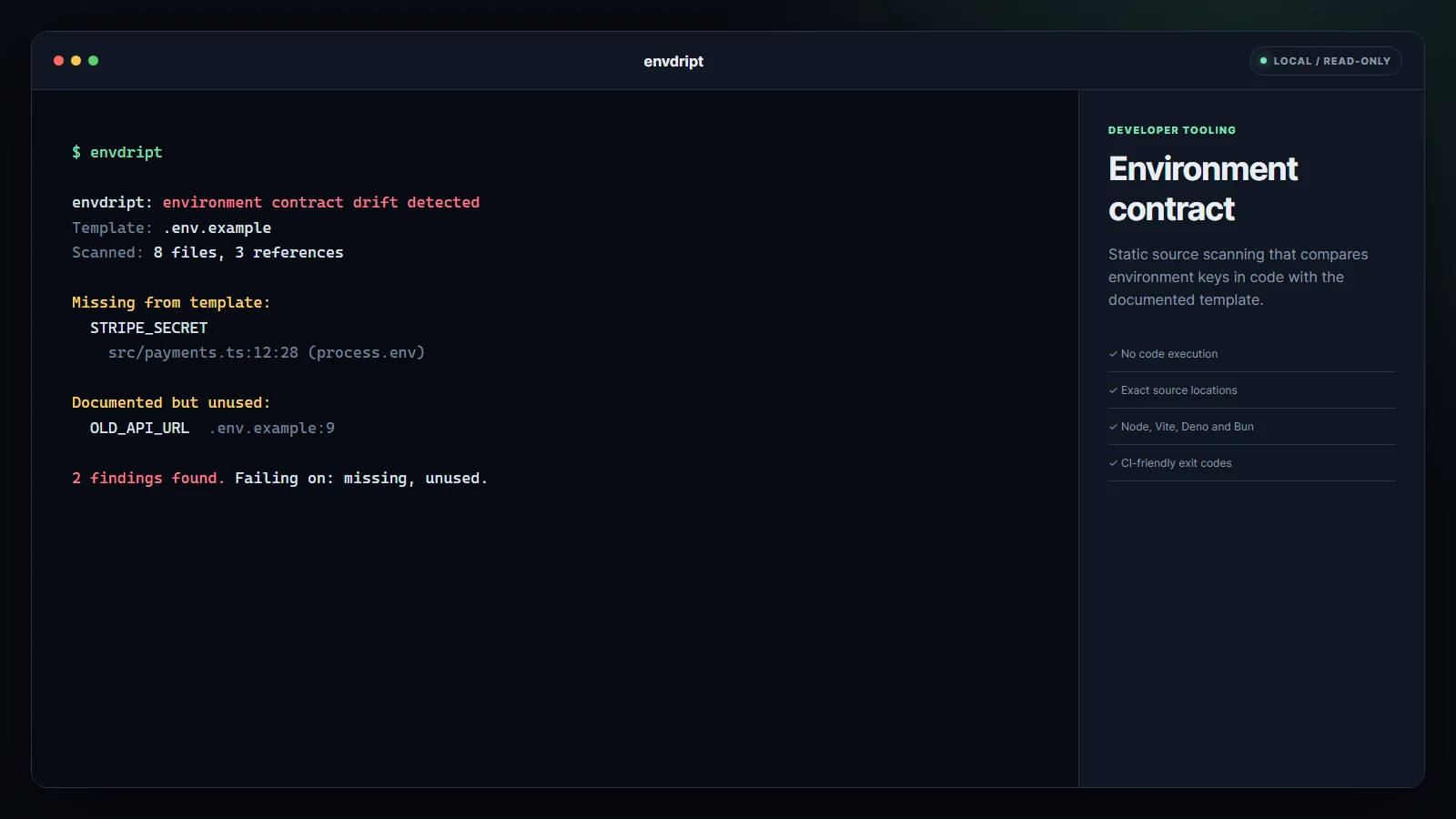
envdript statically verifies the contract between environment variables in source and .env.example, then returns source-located findings and CI-friendly exit codes.
Deliverables
- Static scanner
- Source locations
- Missing / unused / duplicates
- Ignore patterns
- JSON output
- CI integration
01 / Drift arrives silently.
A new secret or endpoint enters the code while the template stays unchanged. Or an old variable remains documented and continues to create confusion.
For JavaScript and TypeScript repositories that treat configuration as part of product quality.
02 / The contract becomes verifiable.
The CLI recognizes static access for Node, Vite, Deno, and Bun, compares references with the template, and reports missing, unused, and duplicate variables.
Output separates missing, unused, and duplicate variables, then identifies the file, line, column, and detected syntax.
03 / Fewer onboarding and deployment surprises.
The team sees the break in a pull request rather than at startup. Rules can be strict where needed and permissive for runtime-supplied variables.
envdript does not execute code, modify files, or read secret values from .env unless that file is explicitly selected as the template.
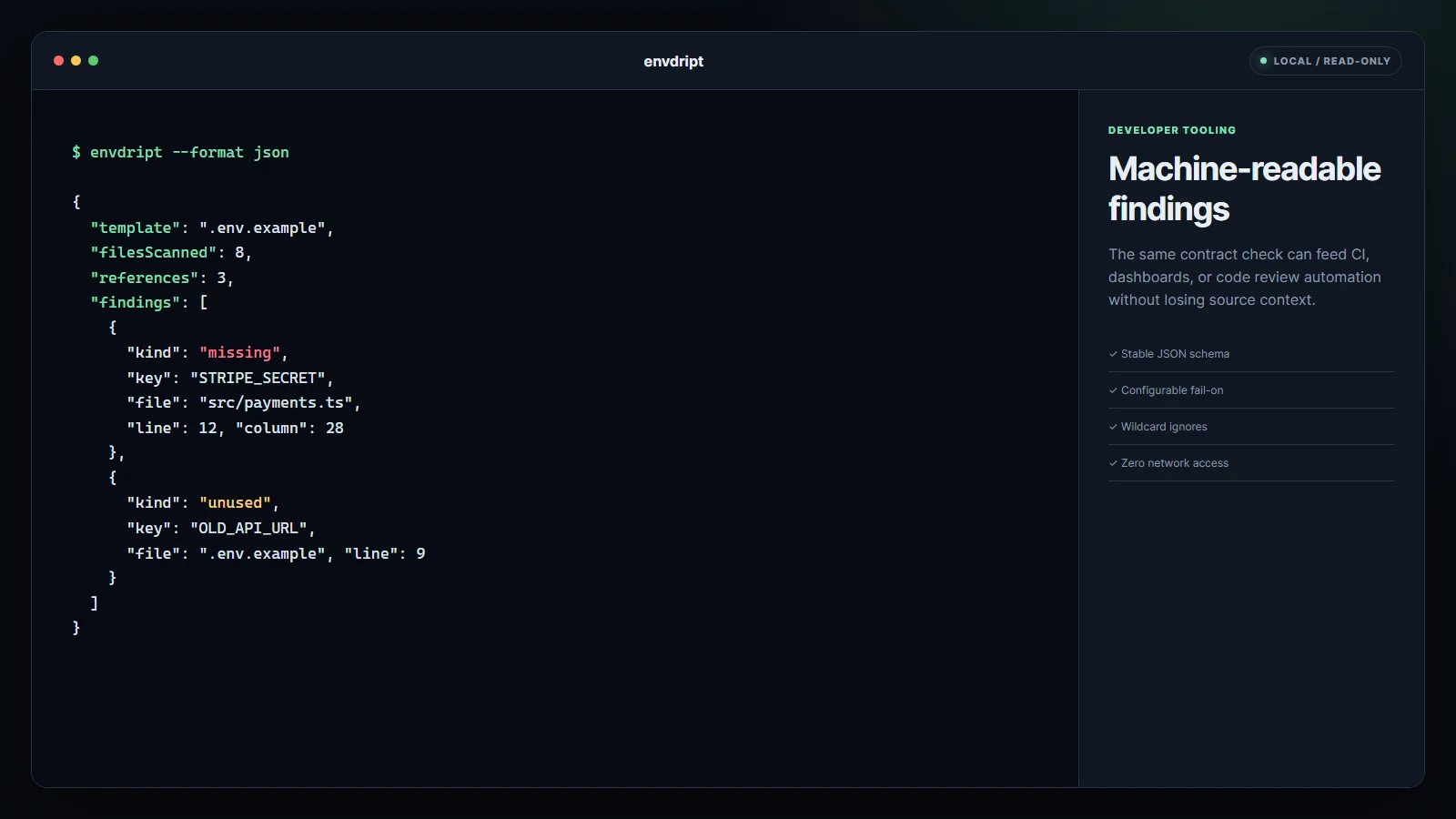
01JSON output
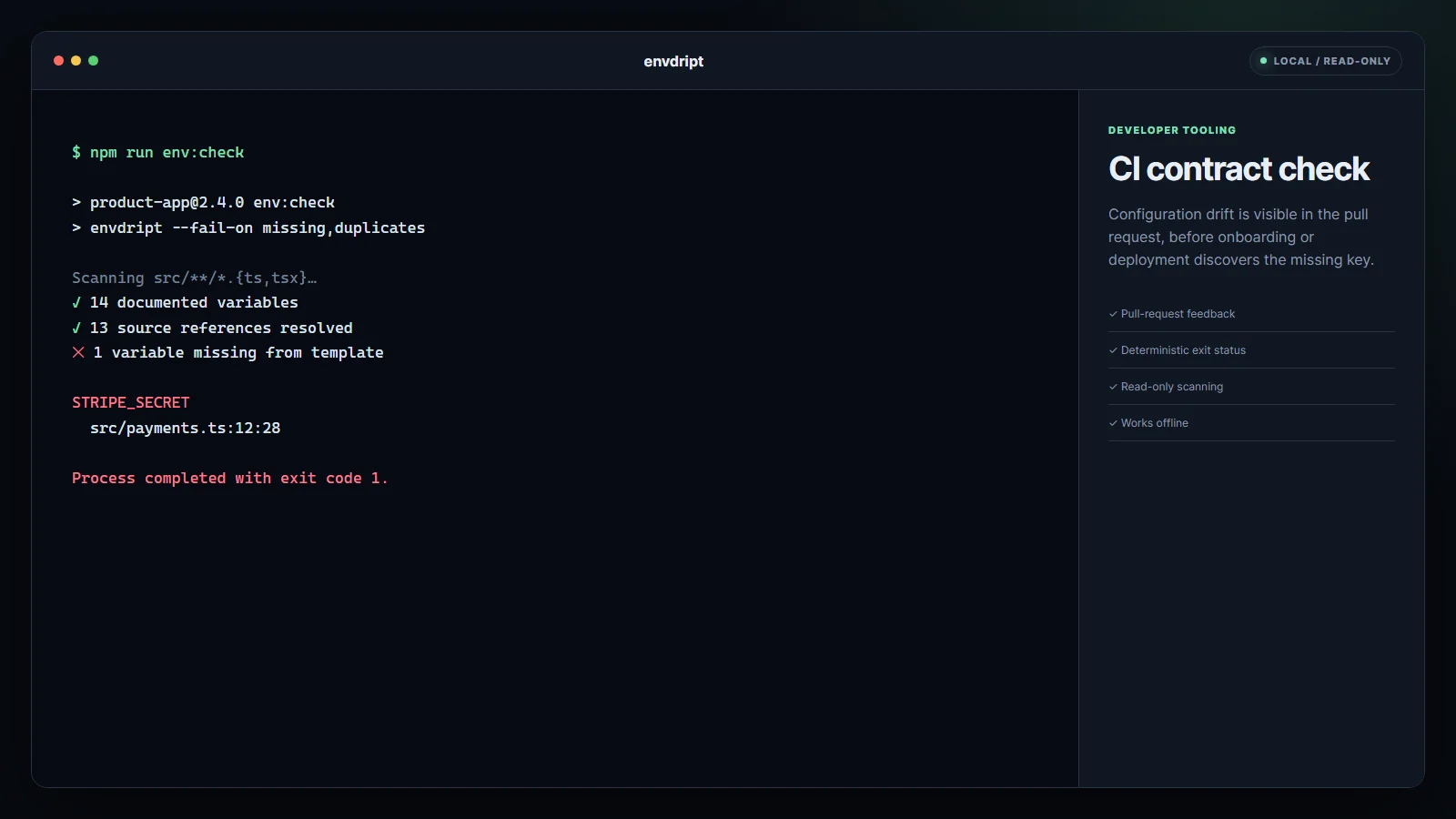
02CI check
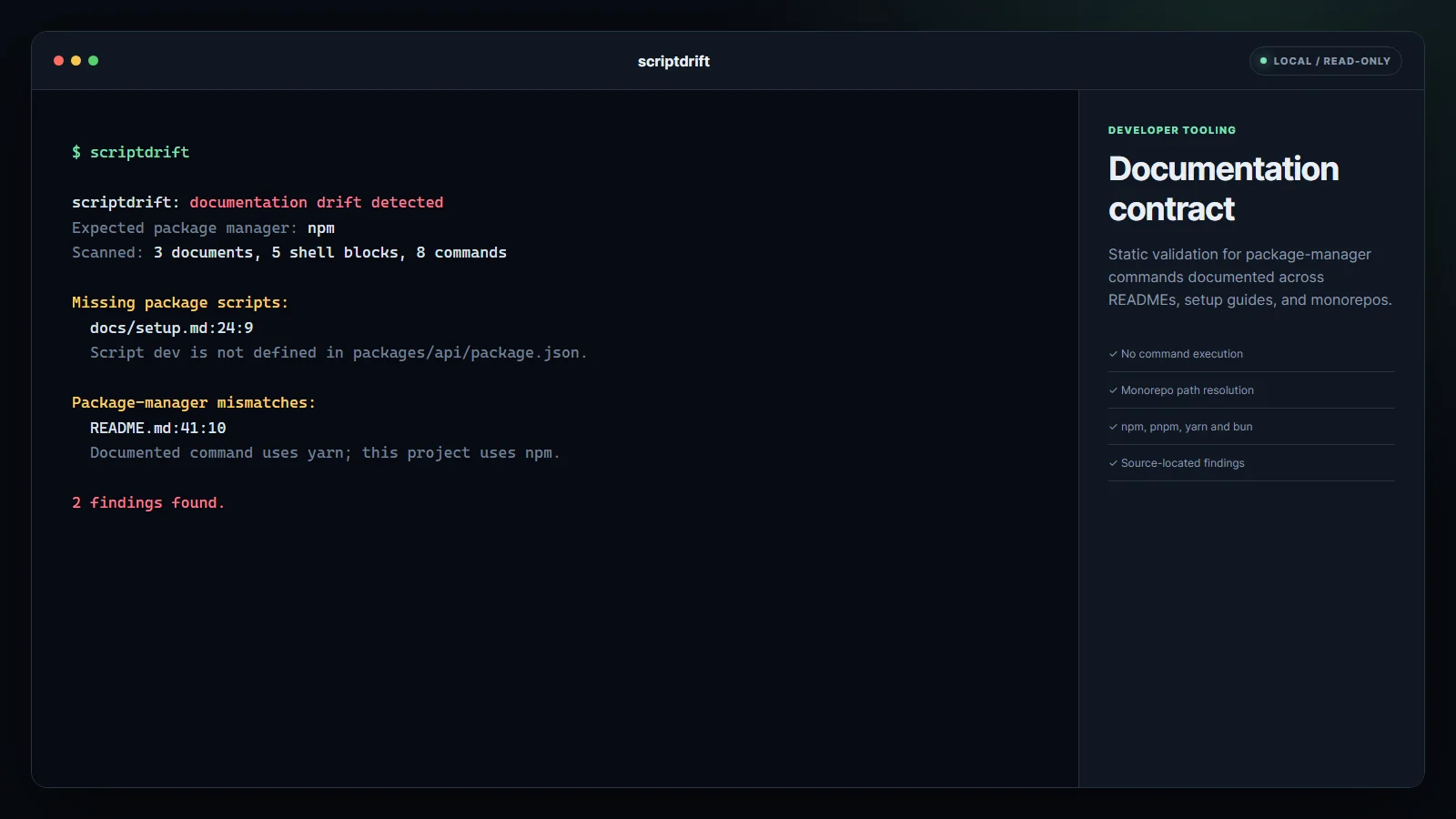
The next signal
Have a project that needs to grow?
Tell us what you are building, what you want to improve, and where you feel stuck.
Start the conversation